
Mahound’s Compromise and Its Reversal
The Satanic VersesThis conflict traces how Mahound’s desire to win converts brings him to a religious compromise, then forces him to choose between political acceptance and the faith he has proclaimed.
increasing Bearing strength in each event
 decreasing
Bearing strength in each eventdecreasingAbu Simbel’s Three-Goddess Offer
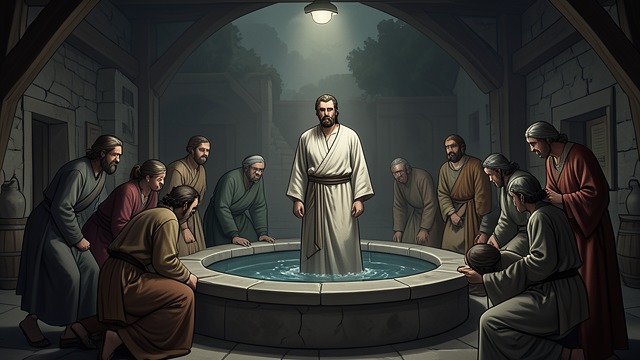
A Bargain at the Well
The political offer
Abu Simbel offers Mahound recognition and a place on Jahilia’s ruling council if Allah will grant Lat, Uzza, and Manat a lesser, intermediary status. The proposal promises to end the new faith’s isolation without immediately displacing the city’s established worship.
The danger beneath recognition
Mahound’s followers see the offer as a trap: accepting it would make the declaration of one God appear negotiable and leave the movement open to charges of fraud. Mahound, however, has been shaken by the failure to persuade the city and wonders whether a limited concession might bring its people within reach.
The exchange turns a political negotiation into a test of what the new faith can become. The question is no longer only whether Mahound can survive opposition, but whether survival requires him to alter the terms of his message.
The Temptation of Easier Belief
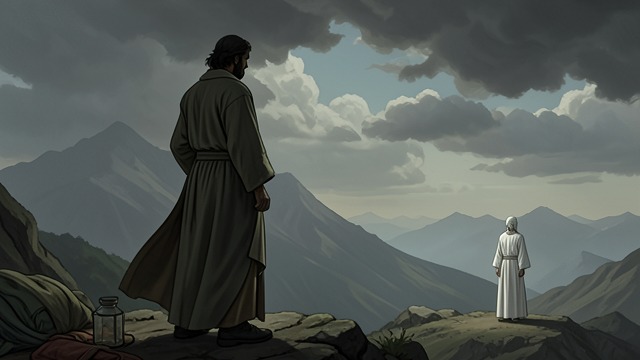
A Revelation Under Pressure
A crisis of judgment
Alone on Mount Cone, Mahound reviews the possibility that the three goddesses might be recognized without being made equal to Allah. He weighs the spiritual cost against the prospect of winning the people of Jahilia, and asks whether a more accommodating message could make belief easier.
The unanswered question
Gibreel’s presence does not settle the dilemma for him. In the dreamlike act of listening, Mahound’s questions seem to arise from within himself, while the angel remains unable to supply a certain answer. The source of the coming words is therefore bound up with the very uncertainty Mahound hopes to resolve.
The crisis makes revelation inseparable from human choice. Mahound must act without the certainty he wants, while the audience and his followers will later judge the authority of the decision by its consequences.
The Verses of Recognition
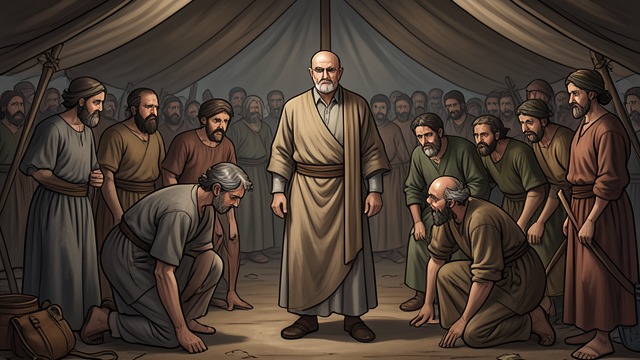
A Public Reversal
The crowd changes sides
In the poetry tent, Mahound recites verses that appear to recognize the three goddesses as exalted beings whose intercession is desired. Abu Simbel and Hind publicly bow, and the movement of the crowd turns the unpopular Messenger into the focus of an unexpected civic and religious triumph.
A victory that divides
Khalid watches in horror as the gathering kneels, while Mahound remains standing. His followers are left to reckon with a message that seems to contradict the creed they have been repeating. The public success does not resolve their doubts; it intensifies the fear that their faith has been compromised at its most basic point.
The scene makes the conflict visible to the whole city. Political acceptance arrives, but at the cost of uncertainty about whether the words came from divine authority or from the pressures surrounding Mahound.
The Recantation
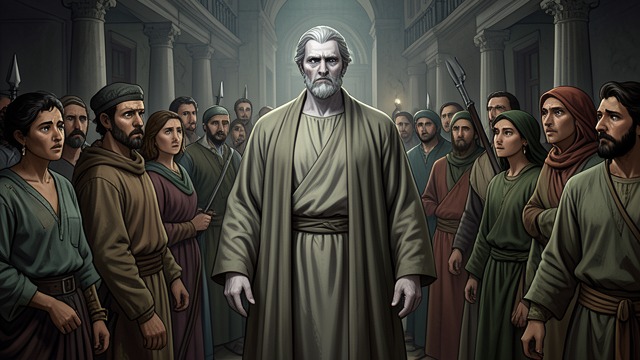
Reversing the Message
The claim of deception
After another visionary struggle, Mahound decides that the earlier verses came from Shaitan rather than the archangel. He returns to Jahilia and publicly replaces them with a declaration that the goddesses are only names imagined by people and their ancestors.
The cost of repudiation
The reversal destroys the settlement Abu Simbel had offered and restores the conflict with Jahilia’s ruling powers. Mahound’s followers face renewed danger, while the city is left with two incompatible recitations and the question of how either can be distinguished from the other.
Gibreel’s dream perspective adds a further complication: he remembers speaking both the initial verses and their repudiation. The correction restores the official boundary of belief, but leaves unresolved the deeper crisis of who, or what, speaks through revelation.
Persecution and Departure
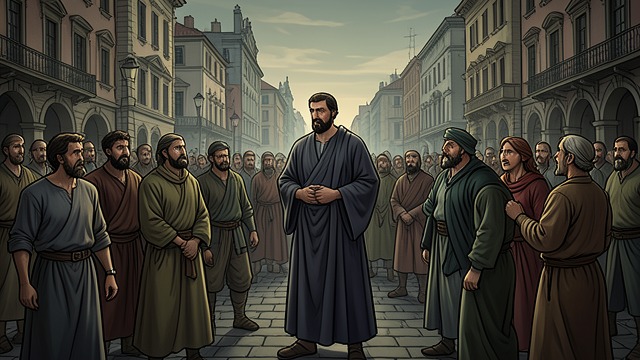
The Political Aftermath
Punishment after compromise
Abu Simbel begins a policy of persecution against the adherents of Submission, restricting where they may live and work while his controlled gangs carry out assaults. The number of converts nevertheless increases as the pressure grows, making the rulers’ attempt to contain the movement less effective.
The route out
Mahound agrees that his followers should accept shelter in Yathrib rather than remain trapped in Jahilia. Khalid expresses regret for having doubted him, but Mahound rejects the idea that the compromised verses were a deliberate lesson staged for the faithful. His response leaves the moral burden with the people who must live through the consequences.
The conflict shifts from a contest over the city’s religious terms to a struggle over survival and migration. The departure preserves the community, but does not settle whether the original compromise was weakness, deception, or an unavoidable crisis of faith.
During the Festival of Ibrahim, before Mahound’s return from Mount Cone
On Mount Cone, after the disciples debate Abu Simbel’s offer
At the Festival of Ibrahim, after Mahound descends from Mount Cone
After Mahound returns to the cave and concludes the verses were satanic
After the repudiation, as Mahound’s followers prepare to leave Jahilia
